THE SHORT ANSWER When a PEO does not resolve a payroll, benefits or service problem, define the issue and the outcome you need, document the history, identify who currently owns it and escalate to someone with authority to fix it. Do not keep arguing with people who cannot resolve it. Protect employees first, set a clear next step and stay involved until the result is verified.
A professional employer organization can be an extremely valuable partner, providing payroll infrastructure, benefits administration, HR support, workers' compensation and expertise. Still, even a strong PEO relationship will occasionally produce a question, mistake or service problem that needs attention.
An issue does not automatically mean the PEO is wrong for the company. The more useful question is whether the relationship has a reliable way to identify the problem, reach the right people, protect employees and verify the result. That is PEO relationship governance, and companies should understand how it works before the first urgent problem appears.
Key takeaways
- Start by understanding what happened, where the process failed and what resolution the company needs.
- Document the issue, its history, its employee or business impact and what has already been attempted.
- Escalate to a person who has authority to resolve the problem instead of repeating the same conversation at the same level.
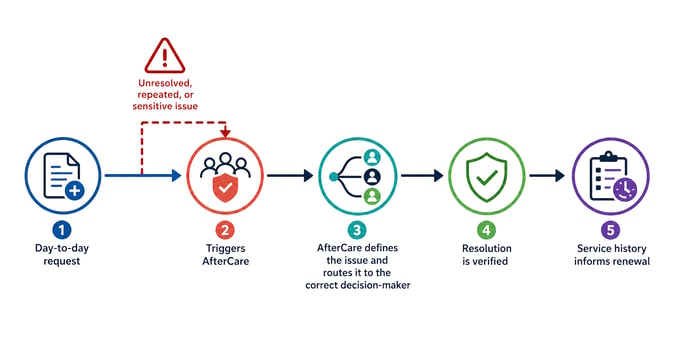
- Use an advisor for unresolved, repeated or sensitive issues, while ordinary day-to-day questions remain with the PEO.
- Carry service history into renewal so pricing, resources and commitments can be negotiated with evidence.
What should you do first when a PEO problem is not being resolved?
First, slow the conversation down long enough to define the problem accurately. A frustrated team may describe the problem as an unresponsive PEO, but that may hide several different issues: a missing insurance card, an incorrect payroll deduction, an unresolved tax notice, a failed integration, a benefit enrollment discrepancy or an account manager who is not matching the client's service needs.
Use this sequence:
- Protect the employee or business operation that is exposed right now.
- Describe what happened and when it began.
- Identify everyone who has been involved and what each party has already done.
- State the exact resolution the company needs and how success will be verified.
- Route the issue to someone with the knowledge and authority to produce that result.
This sequence keeps the escalation factual. It prevents the delay and frustration surrounding the issue from becoming confused with the original problem. It also gives the PEO a clear opportunity to solve the problem instead of forcing its team to reconstruct the entire history from scattered emails and calls.
Understand where the problem actually is before assigning blame
PEO service often involves several parties. A payroll or benefits issue may involve the client, PEO account team, carrier, retirement provider, technology vendor or government agency. The person who first receives the complaint may not control the correction.
Start by understanding what the client needs, then map how the PEO delivers that service. Determine which system created the information, which team owns the current step and what evidence will prove the correction. This is more productive than beginning with an argument about fault.
Who is responsible when a PEO makes a payroll, tax or benefits error?
Responsibility depends on the service, contract, plan documents and third-party arrangement. The word PEO does not create one universal answer. The IRS distinguishes CPEOs, Section 3504 agents, reporting agents and payroll service providers, and their employment-tax rules differ. Benefits may involve separate plan, carrier and fiduciary roles.
Do not wait for a liability debate before protecting an employee or meeting a deadline. Contain the risk, preserve the records, identify each correction owner and require proof of completion. If an error reached a filed return or wage statement, a closed ticket may not be enough: the applicable correction may require Form 941-X or Forms W-2c and W-3c. Involve qualified advisers when the facts create material exposure.
Document the issue, the history and the resolution you need
A useful escalation record does not need to be long. It needs to be complete enough for a new decision-maker to understand the problem without restarting the investigation. The following information should travel with the issue whenever it moves to another person or team.
|
What to document
|
What to include
|
|
Issue
|
A one- or two-sentence description of what is wrong
|
|
Impact
|
Who or what is affected, including pay, coverage, deadlines, operations or employee trust
|
|
History
|
When it began, dates of prior contacts, ticket numbers and commitments already made
|
|
People involved
|
Client, PEO, carrier, vendor or other parties that have worked on it
|
|
Evidence
|
Relevant reports, screenshots, payroll records, enrollment records, notices or correspondence
|
|
Current owner
|
The person or team that has the issue now and the next action they control
|
|
Needed resolution
|
The correction the company wants, the required timing and how completion will be verified
|
Keep the record factual and protect sensitive employee information. Send only what the recipient needs through an approved secure method. For payroll and tax matters, retain the underlying records according to the company's retention obligations; the IRS generally requires employment-tax records to be kept for at least four years.
Escalate to someone who can resolve the issue, not just someone who can listen
One of the most common mistakes is continuing to talk with people who cannot solve the problem. Another is allowing frustration to turn every conversation into an argument. Neither action moves the issue closer to resolution.
The right escalation depends on the situation and where the issue is in the process. It may be the account manager's leader, a payroll or benefits specialist, an implementation leader, an integration team or an executive sponsor. The escalation should explain the issue, the history, the impact, the current obstacle and the result needed. It should also ask for a named owner, a next action and a realistic update time.
Escalation is not an attack on the PEO. It is a way to help a valuable partner bring the correct expertise to a problem that the normal path has not resolved. A good PEO should want that visibility because an unresolved issue can damage both the client relationship and the employee experience.
How quickly should a PEO service problem be resolved?
There is no responsible universal answer. The urgency depends on what is affected, the correction required, the number of parties involved and any legal or operational deadline. A missing insurance card may be simple until an employee needs immediate care. A payroll error may require an off-cycle correction. An integration problem may require controlled testing before the fix can safely reach production.
Every open issue should still have four things: an owner, a next action, an expected update and a definition of done. If any one of those is missing, the client does not have a resolution plan. If the expected update passes without meaningful progress, the issue should move to the next person who can resolve it.
When should an advisor become involved? We are 911, not 411
For day-to-day questions, the client should work directly with the PEO. The account team needs the opportunity to serve the client, and adding another person to every routine request can make ownership less clear.
Dinsmore Steele uses a simple phrase for the difference: We are 911, not 411. AfterCare becomes the active escalation layer when a service issue is not being resolved in a timely way, the same problem repeats, an urgent employee or business need is exposed, or an uncomfortable conversation needs to occur. AfterCare then seeks to understand the issue, the client's history and desired resolution, as well as the PEO's service model, before reaching the person who can fix it.
Examples include:
- A payroll problem is affecting an employee and normal support is not moving it forward.
- An employee needs benefit access or a replacement insurance card and the request has stalled.
- A carrier enrollment, deduction or coverage issue is moving between teams without ownership.
- A technology integration is failing and the vendors are not coordinating a solution.
- An account manager is not responsive enough for the client's needs.
- A billing, tax, workers' compensation or implementation issue requires a sensitive conversation or senior attention.
AfterCare is part of the ongoing PEO advisory provided to every Dinsmore Steele client at no added charge. It remains involved through implementation, material service issues and renewal, and it stays with an escalation until the client confirms the issue is resolved.
Two anonymous examples of PEO problems that were resolved
A service relationship that needed a more responsive account manager
One client had issues that needed resolution, but its PEO account manager was not responsive enough for the client's needs. The PEO had the capability to serve the company; the assigned service relationship was preventing timely progress.
Victoria, who leads Dinsmore Steele AfterCare, documented the open issues, their history and the response the client needed. She considered how that PEO delivered service, escalated to the right leadership and helped the client receive a new, more responsive account manager.
The client did not need a new PEO. It needed the service structure corrected. The result preserved the relationship and helped the team use the PEO more effectively.
An integration issue that had stopped moving
Another client kept having problems with an integration it relied on. The PEO was not answering the client's questions, and the issue had stopped moving toward resolution.
AfterCare clarified what was failing, gathered the history and connected the issue to people who could resolve it. The answer was not to abandon the PEO or integration. It was to create ownership and remain involved until the correction was confirmed.
Both examples show why an isolated service problem and a structurally wrong PEO are not the same thing. Effective governance can correct the first without creating the cost and disruption of an unnecessary provider change.
Why PEO governance must begin during implementation
The first major test of the relationship is implementation. Demos show how a platform is intended to work. Implementation determines whether payroll, benefits, data, deductions, reporting and integrations work for the client's actual team. If no one governs that process, the client may discover too late that a decision was missed or that important historical data was left behind.
AfterCare serves as the bridge between the client and the PEO. It helps make sure historical employee and HRIS data is gathered before access to the prior system changes, the transition plan has owners and deadlines, and neither the client nor the PEO assumes the other party handled a critical task. It also creates the issue history and relationships that will matter after go-live.
In our experience, most PEO brokers are structured to broker the PEO. They are not structured to manage implementation or govern what happens after the client joins. That distinction matters. A proposal may identify a strong provider, but it does not preserve historical records, verify an integration, resolve a stalled service issue or use performance evidence at renewal.
Dinsmore Steele applies a method and decision framework refined over 16 years to determine whether a PEO fits, identify the best-aligned provider and remain as a governance layer after placement. The objective is not simply to find a PEO that works on the effective date. It is to help the relationship work today and tomorrow, with a partner that cares whether it does.
Use service history in PEO renewal negotiations
Service problems should not disappear from the record when they are solved. The delay, correction and business impact can matter at renewal, helping leadership distinguish an isolated event from a recurring weakness and giving the PEO evidence to address.
At renewal, AfterCare reviews increases and overall costs alongside the service record. Relevant data can show what went wrong, where the process broke down and how the provider responded. That supports a more productive negotiation about pricing, account resources, service commitments, benefit administration or other changes the relationship needs.
One issue rarely proves that a company should switch PEOs. An account manager can be changed, an integration can be corrected and a service process can be realigned. A repeated problem that continues after proper escalation deserves a broader alignment review. The decision should be based on the economics, the provider's response, the employee impact and whether the service model still fits the company.
Dinsmore Steele has established teams and relationships across the PEO market, supported by its size and volume. That access helps AfterCare place an escalation with people who can act. In our experience, issues do not become repeated unresolved patterns after that governance layer becomes involved because the problem has an owner, visibility and follow-through.
What should you ask before choosing a PEO or a PEO broker?
Whether a company selects a PEO on its own or works with a broker, leadership should understand what happens after the agreement is signed. Ask for specific answers to the following questions before relying on a promised service experience.
|
Governance area
|
Question leadership should ask
|
|
Implementation
|
Who owns the implementation plan, dependencies, testing and unresolved items through stabilization?
|
|
Historical data
|
Who identifies, exports, validates and retains payroll, tax, employee, benefits and HRIS history before access ends?
|
|
Escalation
|
Who steps in when normal support stalls, and do they have relationships with empowered PEO leaders?
|
|
Resolution
|
Who tracks the issue through completion and confirms the client received the result it needed?
|
|
Renewal
|
Who connects service history, increases and total cost to an evidence-based renewal negotiation?
|
|
Ongoing value
|
Who helps the client understand and use the full PEO service model as the company changes?
|
A company should know the names, responsibilities and escalation path behind those answers. A general promise to be available is not the same as an operating process. The additional layer of support makes the difference when an employee needs help, a difficult conversation is required or a renewal must reflect the actual experience of the relationship.
Frequently asked questions
What should I do when my PEO does not resolve a payroll problem?
Protect the employee, document the pay period and discrepancy, preserve the records and state the correction needed. Ask for an owner and update time. If the normal path stalls, escalate to payroll leadership or an advisor who can reach someone with authority.
Who is responsible when a PEO makes a payroll or benefits error?
It depends on the contract, plan documents and third-party arrangement. The client, PEO, carrier or vendor may control different parts of the correction. Contain the impact, map each owner and obtain written proof of the fix.
How quickly should a PEO correct a service problem?
Timing depends on urgency. Pay, medical access or a deadline needs faster containment than a routine report. Every issue should have an owner, next action, expected update and definition of done. Escalate when an update passes without progress.
What should I do if an employee was enrolled in benefits incorrectly?
Confirm the election, eligibility, effective date, deductions and carrier record. Identify the correction owner, protect access to care when possible and obtain written confirmation. If coverage or a deadline is disputed, also follow the plan's formal claims or appeal procedure.
How do I escalate an unresolved issue with my PEO?
Provide the issue, impact, timeline, evidence, prior attempts and desired resolution. Ask for someone who can act, keep the conversation factual and remain involved until the result is verified.
What records should I keep when documenting a PEO service failure?
Keep relevant tickets, emails, dates, commitments, payroll or enrollment records, notices and proof of correction. Protect sensitive information and use secure channels. Record the impact and response because the history may matter at renewal.
Should one service problem cause a company to switch PEOs?
Usually not. First try to correct the service model. A change deserves consideration when problems repeat after proper escalation, economics are no longer competitive or the PEO no longer fits the company's needs.
What is Dinsmore Steele AfterCare, and does it cost extra?
AfterCare is the implementation, escalation, renewal and governance layer included for every Dinsmore Steele client at no added charge. It is available only to Dinsmore Steele clients and stays involved until the client confirms resolution.
The right governance layer protects the PEO relationship
A PEO should be a valuable operating partner, not only a transaction processor. Having an additional layer of support can make all the difference: it creates a bridge to the PEO, routes unresolved issues to the right people, protects data during implementation, verifies corrections and brings real service history into renewal decisions.
| NEED TO CONFIRM THE RIGHT PEO FIT AND SUPPORT MODEL? |
Official sources and guidance
IRS - Third-Party Arrangement Chart
IRS - Third-Party Payer Arrangements: Professional Employer Organizations
IRS - Instructions for Form 941-X
IRS - Instructions for Forms W-2 and W-3
DOL - Understanding Your Fiduciary Responsibilities Under a Group Health Plan
DOL - Plan Information for Health Benefits
IRS - Employment Tax Recordkeeping
Important information
This article provides general business information, not legal, tax, accounting, benefits or HR advice. Responsibility depends on the payer arrangement, contract, plan documents, employee status, jurisdiction and facts. Confirm material issues with qualified advisers and the relevant agency or plan administrator.
| ABOUT THE AUTHOR |
| Rodney Steele is the founder and CEO of Dinsmore Steele. He has spent 16 years advising companies on PEO selection, renewal, transition, and governance. Dinsmore Steele has completed more than 6,100 PEO engagements since 2010. |

